Utility billing in a multi-tenanted commercial property can become complicated very quickly.
One building may have a single incoming electricity supply but ten separate occupiers.
Heating may come from central plant.
Water may be shared.
Communal areas need to be separated from tenant areas.
Meters may have been installed at different times and readings may arrive through several different systems.
Good tenant utility billing therefore starts long before the invoice is created.
It starts with knowing what is being measured.
Why tenant sub-metering matters
A main utility meter measures the total consumption entering a building.
It does not necessarily show which tenant used what.
Without sub-metering, landlords may need to divide costs using estimates, floor area or another allocation method.
That can create obvious problems.
Two tenants occupying the same floor area may consume very different amounts of energy.
One could operate five days a week during office hours.
Another could operate long hours and use energy-intensive equipment.
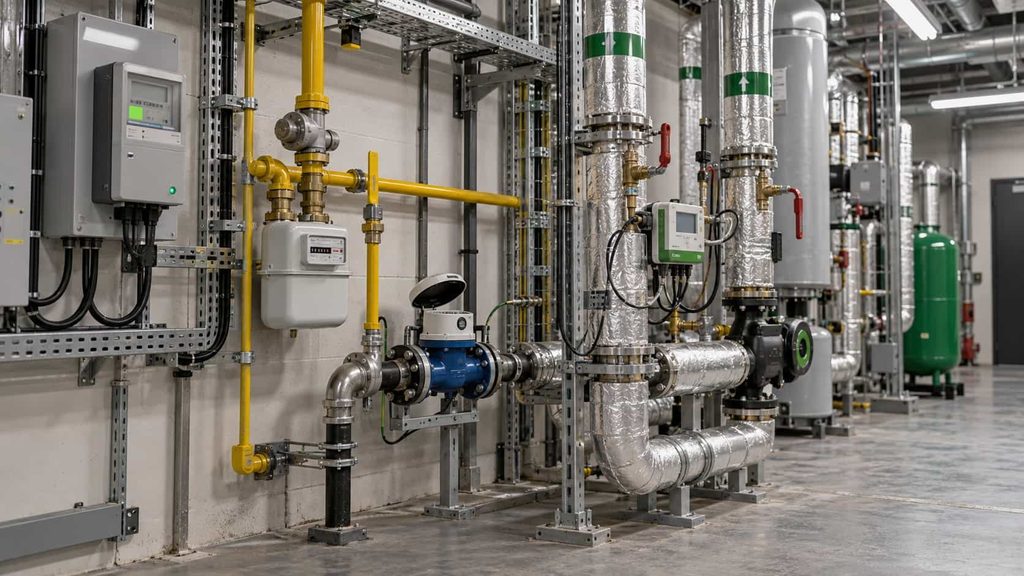
Sub-metering provides actual measurements for individual areas.
What utilities can be sub-metered?
Commercial tenant metering is not limited to electricity.
Depending on the property, separate consumption may be measured for:
- electricity
- gas
- water
- heat
- other utilities
The appropriate arrangement depends on how services are distributed through the building.
In some properties, tenants have direct utility-supplier relationships.
In others, the landlord purchases energy centrally and allocates costs internally.
Understanding that arrangement is essential before deciding how billing should work.

Separate tenant and landlord consumption
One of the first objectives should be identifying the boundary between tenant consumption and landlord consumption.
Landlord loads may include:
- reception areas
- corridors
- lifts
- shared lighting
- external lighting
- car parks
- central HVAC plant
- communal kitchens
- other shared services
If these loads are not separated properly, costs can be incorrectly attributed to tenants.
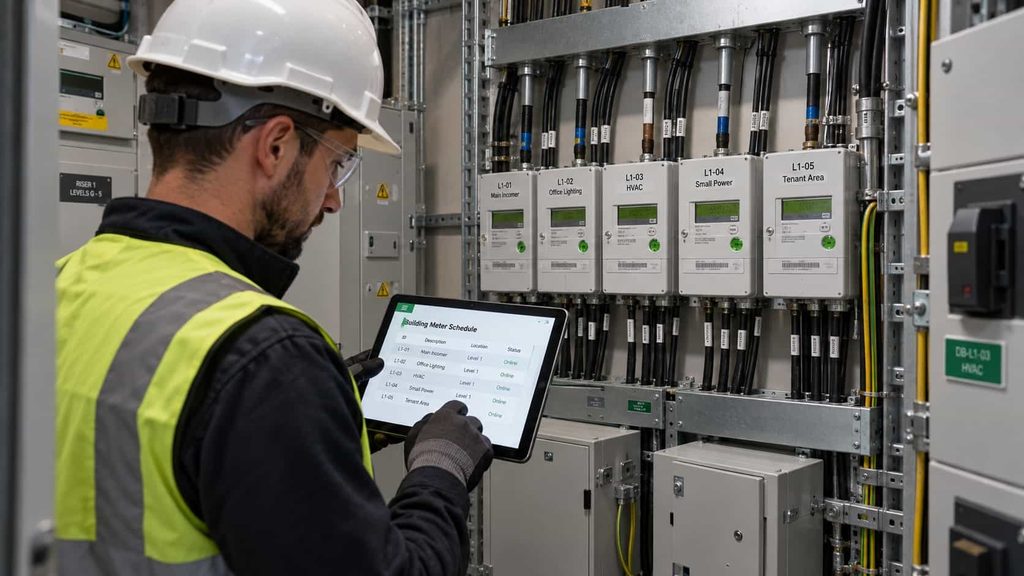
A clear meter hierarchy makes the relationship easier to understand.
Understand exactly what each meter measures
A meter label is not enough.
Buildings change.
Tenants move.
Distribution boards are altered.
Spaces are divided.
New equipment is connected.
A meter originally installed for one tenant may no longer measure exactly the same area several years later.
Landlords should maintain reliable records showing what each meter covers.
This is particularly important when readings affect money.
Meter identification is critical
Every meter needs a reliable identifier.
That identifier should match the correct:
- building
- tenant
- utility
- location
- billing account
- data source
A meter associated with the wrong tenant can create significant billing problems even if the measurement itself is perfectly accurate.
Data management therefore matters just as much as the physical meter.
Automatic readings can simplify billing
Manual meter reading can work for small properties.
It becomes increasingly difficult as the estate grows.
Meters may be located in locked risers, plant rooms, tenant units or other restricted areas.
Readings may also be taken on different dates.
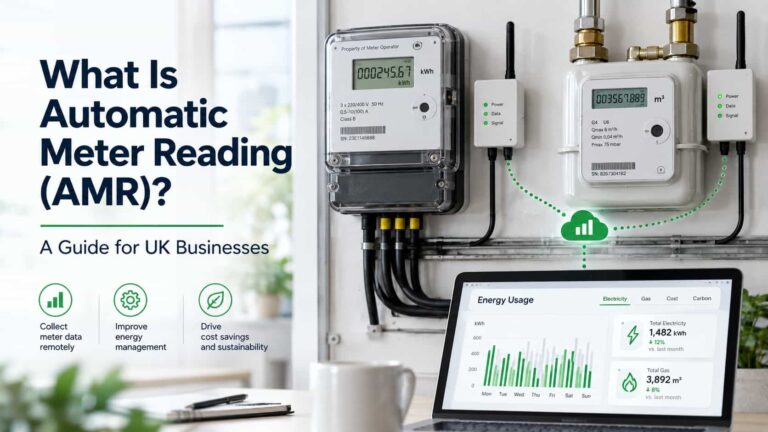
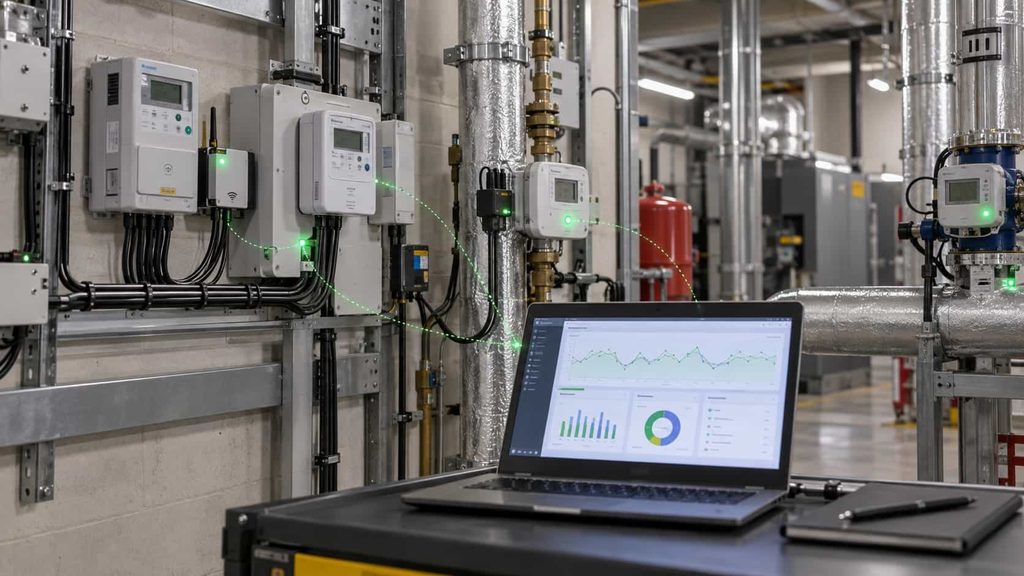
Automatic Meter Reading allows meter information to be collected remotely.
This can make billing periods more consistent and reduce reliance on manual site visits.
Interval data provides useful context
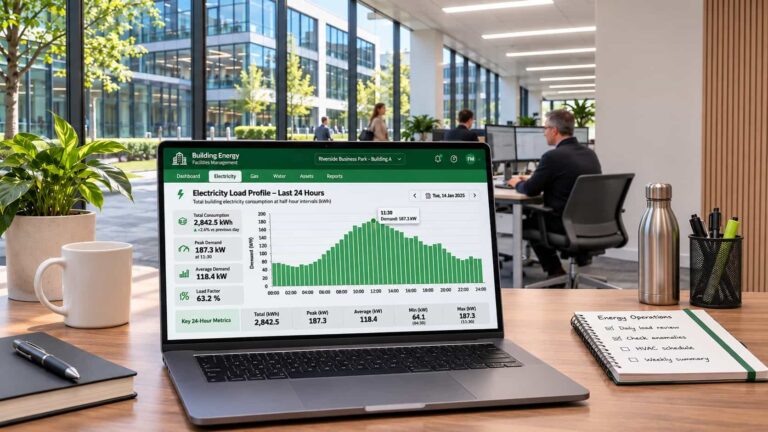
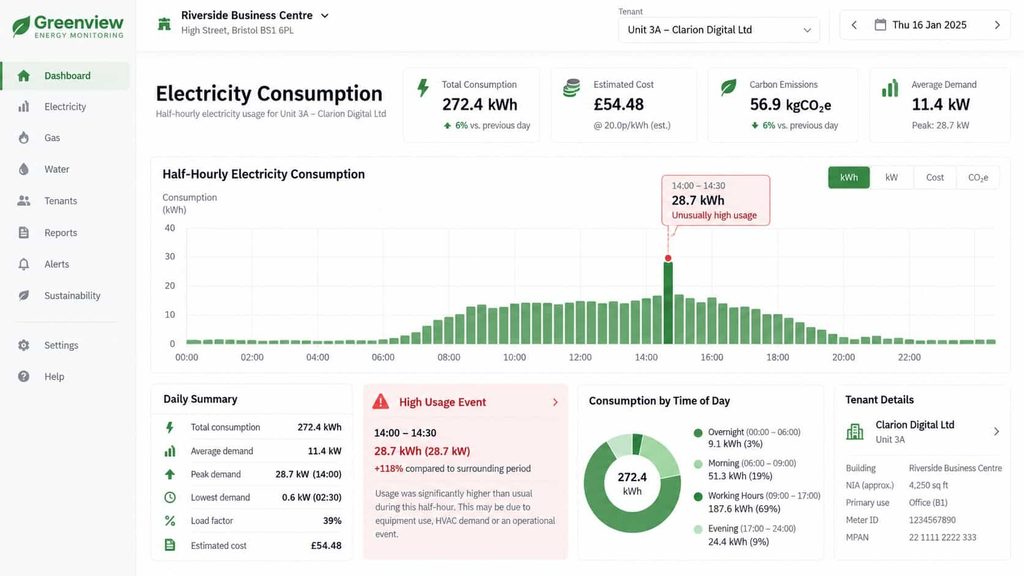
For electricity, half-hourly readings can provide much more information than a start and end reading.
If a tenant questions a sudden increase in consumption, the landlord can examine when the change occurred.
Did demand increase during working hours?
Did overnight consumption rise?
Did weekend usage change?
Was there a sudden increase from a specific date?
This does not automatically resolve every billing question, but it provides evidence that a monthly total cannot.
Communal costs require a clear methodology
Not every property cost can necessarily be assigned directly to an individual tenant meter.
Some services are shared.
Examples may include central plant, common-area lighting or landlord infrastructure.
The allocation method for these costs should be clear and appropriate to the building’s arrangements.
The important point is consistency and transparency.
Metered consumption should not be confused with other property or service charges.
Heat billing can be more complicated
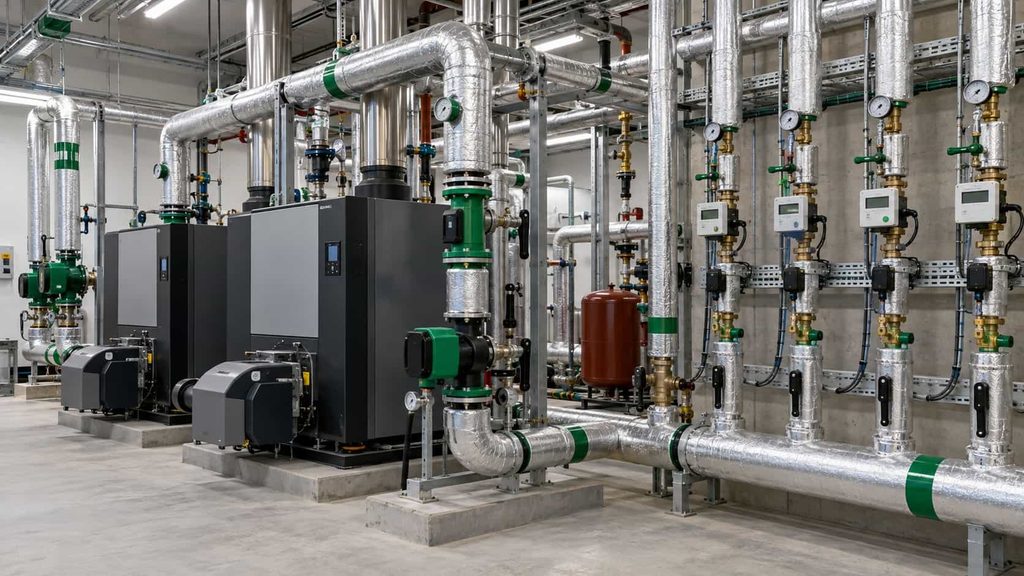
Buildings using communal heating may measure thermal energy delivered to individual occupiers.
Heat meters typically calculate energy using flow and temperature measurements.
This is different from simply measuring gas entering the building.
The landlord may purchase gas or another fuel centrally, generate heat and then distribute that thermal energy to occupants.
Understanding where energy is measured is essential when designing the billing process.
Water re-billing needs good meter records
Water sub-metering can also support tenant cost allocation.
However, water systems can change over time.
Shared kitchens, washrooms, cooling equipment or external supplies can complicate the picture.
As with electricity, the first question should be:
What exactly does this meter measure?
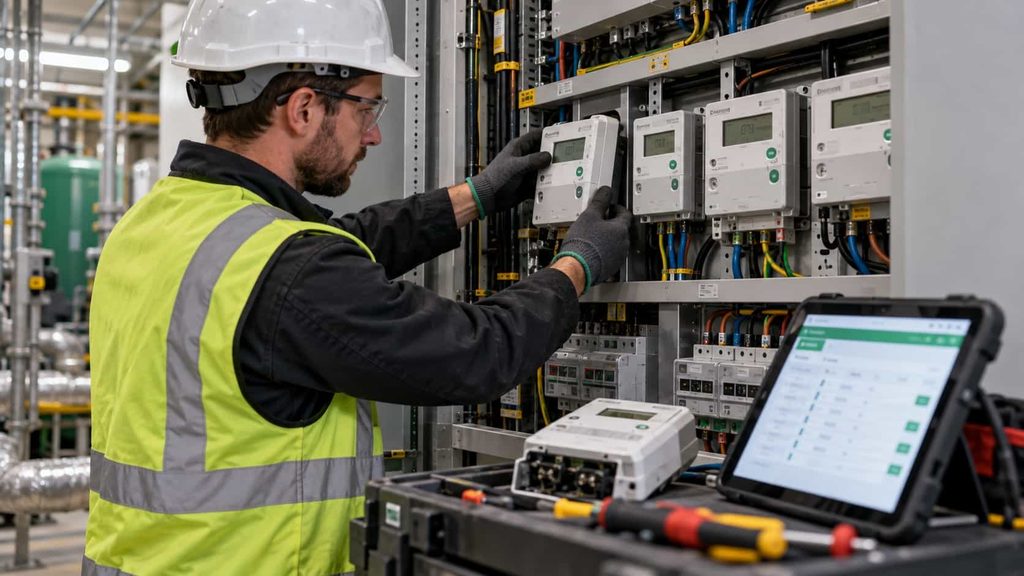
A well-maintained meter schedule can prevent many problems later.
What happens when a meter fails?
Meters and communication systems can fail.
A landlord should therefore have a clear process for identifying missing data.
Possible issues include:
- meter failure
- communications failure
- battery failure
- data logger problems
- replacement meters
- incorrect configuration
A monitoring system can help flag a meter that has stopped reporting.
The important thing is to investigate rather than allowing estimated data to continue indefinitely without understanding the cause.
Meter changes need to be documented
Replacing a meter creates an important point in the data history.
The old meter may end on one reading.
The new meter begins on another.
If the change is not documented properly, consumption calculations can become incorrect.
Records should capture the date of replacement and the relationship between old and new meter identifiers.
The same applies when tenant areas are altered.
Centralised monitoring helps larger estates
A landlord managing one small building may be comfortable with a spreadsheet.
A managing agent responsible for dozens of properties needs something more systematic.
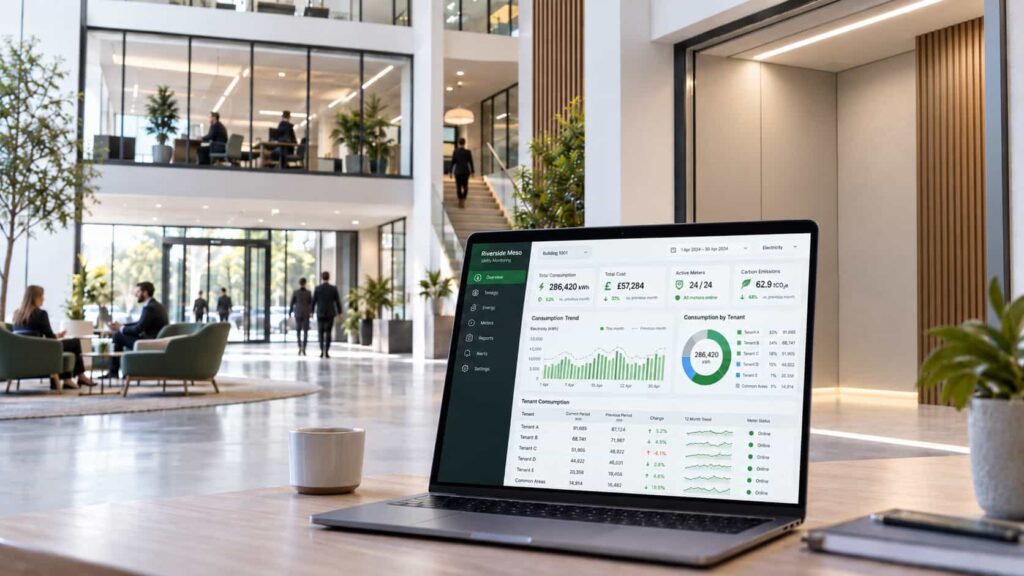
Centralising meter data can make it easier to:
- review consumption
- compare properties
- check missing readings
- prepare tenant reports
- identify abnormal usage
- manage meter information
The main benefit is not simply automation.
It is consistency.
Tenant billing data can also reveal operational issues
The information collected for billing can serve another purpose.
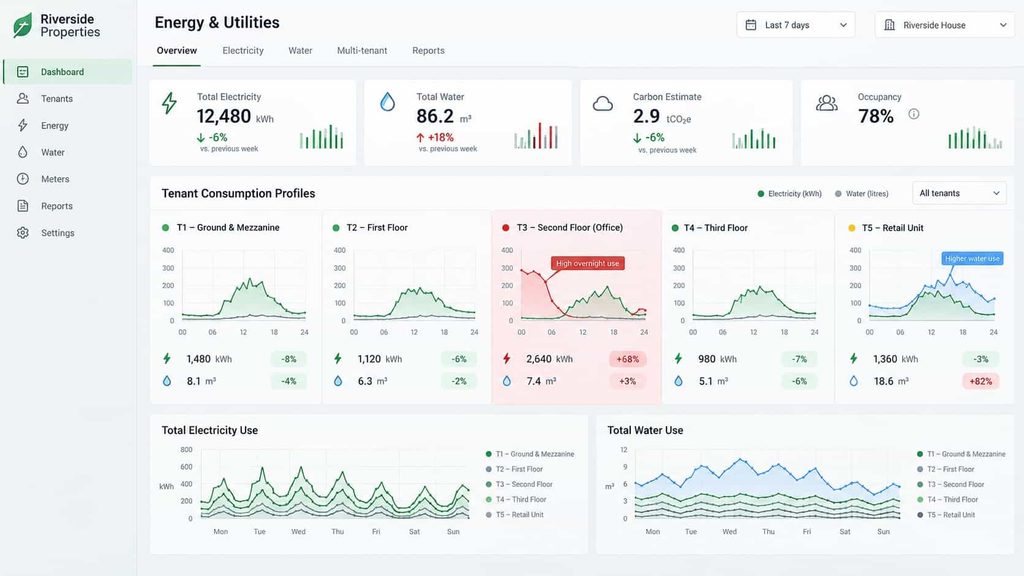
Tenant consumption profiles may reveal unusual patterns.
One tenant may suddenly begin using substantially more electricity overnight.
Another may have an unexpectedly high water load.
A heat meter may stop reporting.
Instead of treating metering purely as an accounting tool, landlords can also use it as a source of operational insight.
Clear communication matters
Utility bills can be difficult for tenants to understand.
Where possible, supporting information should make clear:
- which meter relates to the tenant
- the billing period
- the relevant readings or consumption
- which utility is being charged
- the basis of any additional shared costs
This reduces ambiguity.
It also makes questions easier to investigate because everyone is referring to the same information.
Review the metering arrangement when tenants change
A change of tenant is a good opportunity to check the metering system.
Confirm that the correct meters are associated with the space.
Record opening and closing readings where required.
Check whether the tenant area has changed.
Make sure the monitoring platform and billing records are updated.
Small administrative errors at the start of a tenancy can become much larger problems later.
Good tenant billing starts with good metering
Billing software cannot compensate for poor meter information.
If the wrong meter is associated with a tenant, the calculation will be wrong.
If readings are missing, the bill may rely on estimates.
If communal consumption has not been separated properly, costs may be difficult to allocate fairly.
The quality of tenant utility billing therefore depends on the complete chain:
- the meter
- the installation
- the meter records
- data collection
- data validation
- cost allocation
- the final bill
When each part is clear, landlords and managing agents can understand exactly how utility consumption moves from the incoming supply to individual occupiers.
That creates a much stronger basis for accurate, transparent and manageable tenant utility billing.