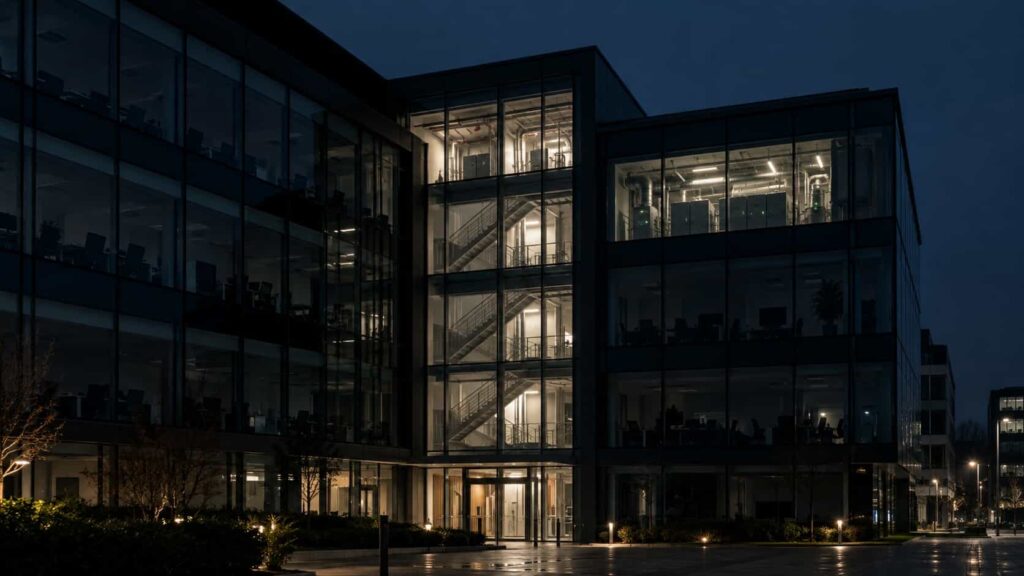
A commercial building does not stop using electricity when the last person leaves.
Some equipment must continue operating.
Servers remain online. Security systems stay active. Refrigeration cannot simply be switched off.
But there is a difference between necessary overnight consumption and a building quietly wasting electricity for ten or twelve hours every night.
Half-hourly electricity data often makes that difference visible.
If your building’s electricity demand remains unexpectedly high overnight, the next question is not simply how much energy is being used.
It is what is still running.
Some overnight consumption is normal
Every commercial building has a different minimum electrical load.
An office might need electricity for:
- IT systems
- security
- fire and safety systems
- network equipment
- essential pumps
- refrigeration
- emergency equipment
A hotel, hospital or manufacturing site may have much greater overnight requirements.
The goal is therefore not to reduce night-time electricity consumption to zero.
It is to understand which loads are essential and whether anything else is operating unnecessarily.
Start with the half-hourly load profile
A monthly electricity bill will not tell you much about overnight consumption.
Half-hourly data will.
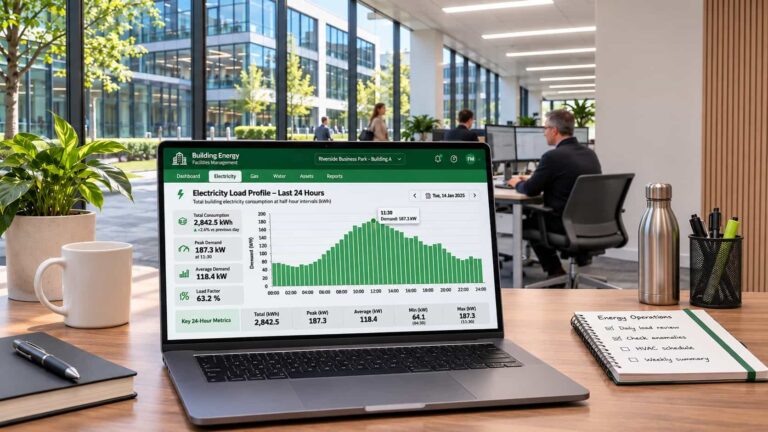
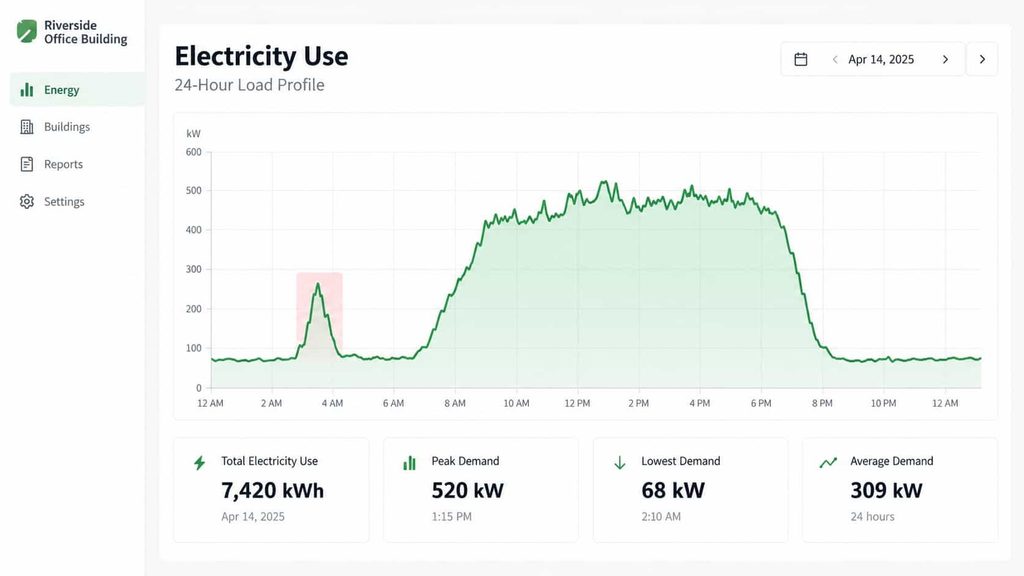
Plot the building’s electricity use across 24 hours.
The profile should show the change between occupied and unoccupied periods.
For many offices, demand rises in the morning, remains relatively high during the day and then falls during the evening.
The lowest level reached overnight is often referred to as the baseload.
If the baseload looks unexpectedly high, investigate further.
HVAC is a common cause
Heating, ventilation and air-conditioning equipment can account for a significant amount of commercial electricity use.
Operating schedules are therefore one of the first things worth checking.
Plant may be running overnight because:
time schedules are incorrect
manual overrides were left active
holiday schedules were not configured
controls have failed
equipment is maintaining unnecessarily tight temperature limits
different systems are working against each other
A BMS can often help identify which systems are operating during these periods.
Heating and cooling may be overlapping
One particularly wasteful situation occurs when heating and cooling operate at the same time.
The heating system increases the temperature.
The cooling system then removes that heat.
This can happen because of poor zoning, control faults or inappropriate set points.
From the main electricity meter alone, the result may simply appear as high consumption.
Combining energy data with building-control information makes the underlying behaviour easier to investigate.
Ventilation can run long after occupants leave
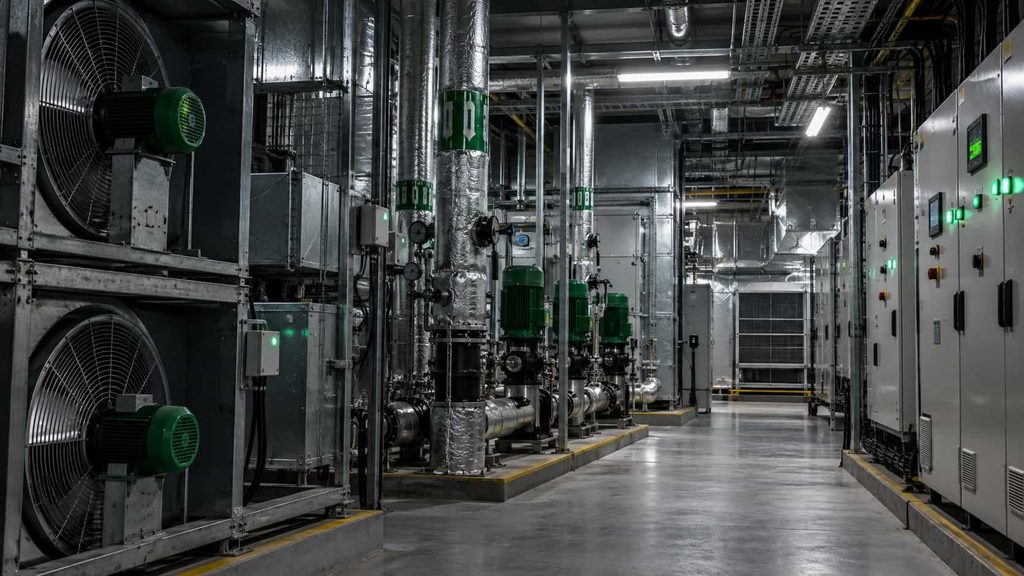
Ventilation schedules are another common source of unnecessary electricity use.
Fans may start several hours before a building opens and continue long after it closes.
In some buildings this is necessary.
In others, the schedule simply reflects settings that were established years ago.
Occupancy may have changed since then.
A building that once operated from 6am until 10pm may now be used from 8am until 6pm.
If the plant schedule was never updated, the building may still behave according to the old operating pattern.
Lighting may not be shutting down properly
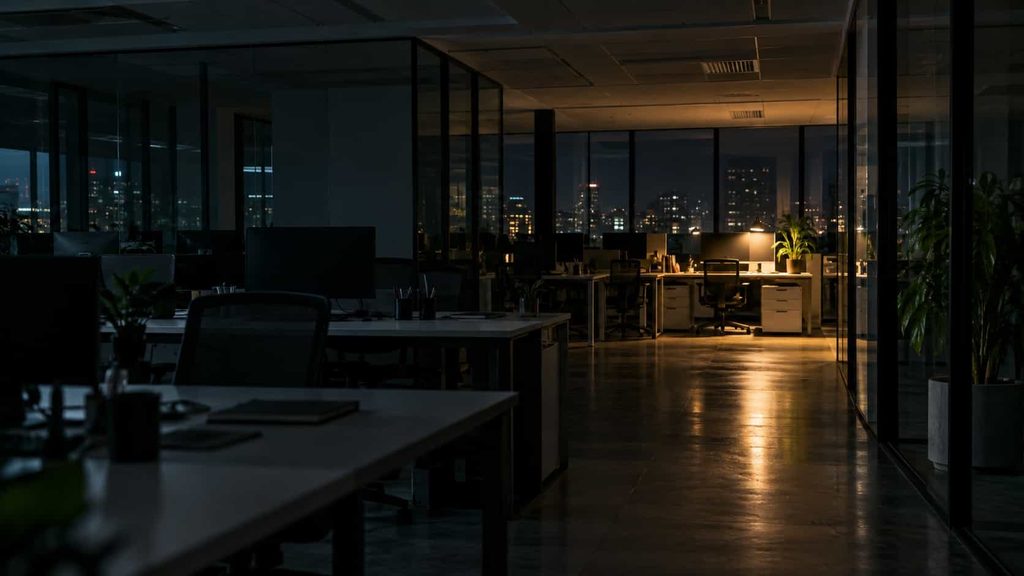
Modern lighting controls can reduce unnecessary consumption, but they still depend on correct installation and configuration.
Lighting can remain on because of:
incorrect time schedules
failed occupancy sensors
manual overrides
cleaning schedules
external lighting settings
areas that are not included in central controls
Walking through a building late at night can sometimes reveal obvious problems.
Half-hourly electricity data provides a way to identify whether the scale of the issue is significant.
Electric water heating can create hidden loads
Commercial hot-water systems can consume electricity overnight even when the building is empty.
Immersion heaters or electric calorifiers may be scheduled unnecessarily.
They may also operate because of heat losses from stored hot water.
The consumption is often invisible to occupants because nothing appears to be happening.
A dedicated sub-meter can make the load much easier to understand.
Pumps can operate continuously
Pumps are another common source of continuous electricity consumption.
Heating, cooling and water systems may contain pumps that should respond to demand but instead operate at fixed speed or according to incorrect schedules.
One pump may appear insignificant.
Several pumps operating unnecessarily for thousands of hours each year can become a meaningful load.
Again, the main meter may reveal the problem but not its source.
Sub-metering or BMS data can provide the additional detail.
Server rooms and IT equipment need context
IT equipment is often responsible for legitimate overnight consumption.
However, even here there may be opportunities to improve efficiency.
The question is not whether servers are running.
It is whether the amount of electricity consumed makes sense for the equipment and cooling requirement.
A server room may contain both the IT load and dedicated cooling.
If the cooling system is operating inefficiently, the electricity profile can remain high even when computing demand is stable.
Refrigeration creates a genuine 24-hour load
Retail, hospitality and food businesses may have significant refrigeration loads.
These cannot simply be turned off overnight.
But a consistent 24-hour load does not mean it should never be investigated.
Changes in refrigeration consumption can indicate:
poor maintenance
damaged seals
incorrect temperature settings
dirty condensers
equipment faults
changes in operating conditions
Historic half-hourly data can help show when consumption began changing.
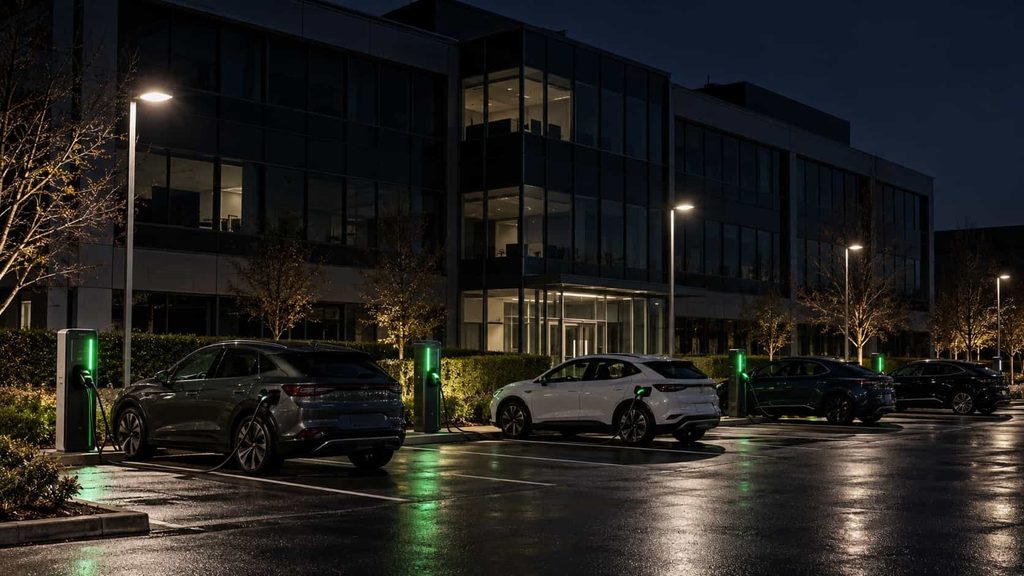
EV charging can move demand into the night
Workplace EV charging can fundamentally change an electricity profile.
Previously, a building may have shown a sharp reduction after 6pm.
Once EV charging is introduced, additional consumption may continue into the evening or night.
This is not necessarily waste.
It may simply represent a new and intentional electrical load.
That is why energy monitoring needs context.
The question is whether charging is occurring when expected and whether it is creating avoidable demand peaks.
Tenant equipment can affect landlord consumption
Multi-tenanted buildings introduce another complication.
The landlord may see unexpectedly high overnight consumption but have limited visibility of individual occupiers.
One tenant may operate extended hours.
Another may run server equipment continuously.
A restaurant or retailer may have refrigeration.
Without tenant sub-metering, all of these loads can disappear into one building-wide number.
Separating landlord, communal and tenant consumption makes the situation much easier to understand.
Building changes can leave old loads behind
Commercial buildings evolve.
Tenants move out.
Equipment is replaced.
Floors are refurbished.
New plant is installed.
Temporary systems become permanent.
It is surprisingly easy for old equipment to remain energised after its original purpose disappears.
Energy data can reveal these forgotten loads.
If the overnight baseload suddenly increased after a refurbishment and never returned to its previous level, the timing provides a useful clue.
How much can a small overnight load add up to?
Continuous consumption is easy to underestimate.
A load operating for ten unnecessary hours every night repeats roughly 3,650 hours over a year.
Even a relatively modest electrical load can therefore accumulate significant annual consumption.
This is why night-time energy use deserves attention.
The problem is not necessarily a dramatic spike.
It may be a small load that never stops.
Compare similar buildings
Multi-site organisations have a useful advantage.
They can compare buildings.
If ten similar offices all fall to a low overnight demand but one remains substantially higher, that property becomes an obvious priority for investigation.
The comparison does not prove that the site is inefficient.
There may be a legitimate operational difference.
But it provides a useful starting point.
Use sub-metering to narrow the search
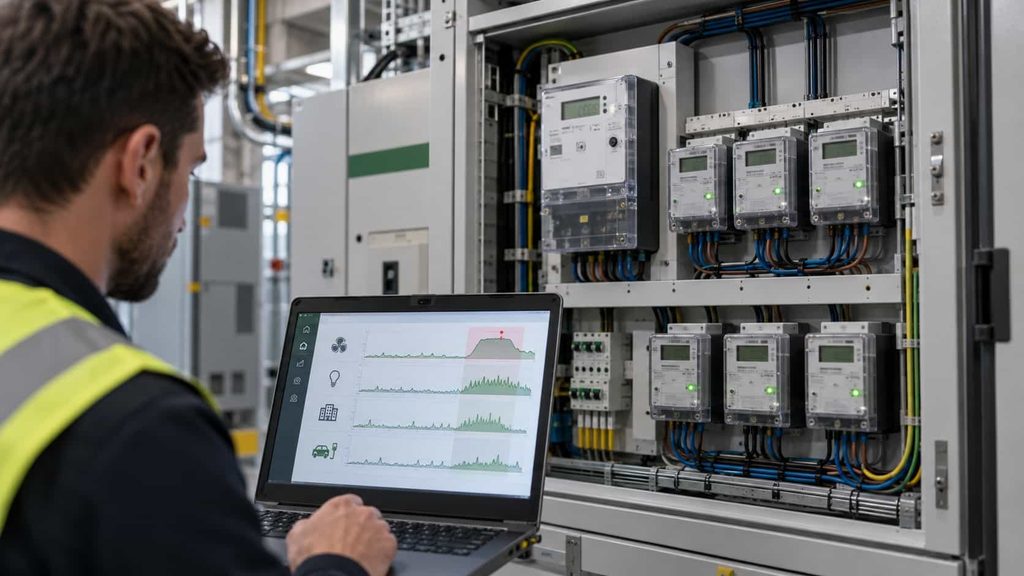
Once high overnight consumption has been identified, the next step is to determine where it comes from.
Electrical sub-metering can separate loads such as HVAC, lighting, tenants, EV charging and major equipment.
A building may have a high total baseload but one sub-meter could account for most of it.
That changes the investigation from “why is the whole building using so much electricity?” to “why is the ventilation system using electricity all night?”
The second question is much easier to answer.
Make one change and measure the result
One of the advantages of interval data is that changes can be tested.
If a plant schedule is adjusted, compare the next few days with the previous pattern.
Did overnight demand fall?
Did comfort remain acceptable?
Did another load increase instead?
This creates a simple feedback loop.
Measure.
Investigate.
Change.
Measure again.
Overnight electricity use is a clue
High night-time consumption does not automatically mean something is wrong.
Some buildings genuinely need substantial 24-hour electricity use.
But if the building should be largely inactive overnight, the load profile should reflect that.
When it does not, the electricity data is telling you something.
The meter may not identify the exact cause.
It tells you when the problem exists.
Sub-metering, BMS data and knowledge of the building can then help explain why.
That is what makes overnight energy monitoring so useful.
It turns an invisible operating cost into something that can be seen, questioned and investigated.