
Every day, thousands of businesses across the UK are running blind when it comes to their energy consumption. They get a bill each quarter or month, squint at the charges, maybe wonder if they’re paying too much, and move on. But here’s the thing: by the time you see that bill, you’ve already wasted money for the past 30 days. You’ve had no way to know where the waste came from or how to stop it from happening again next month.
Real-time energy data changes that completely. And not in a complicated, technical way that requires a degree to understand. We’re talking about genuinely useful information that lets you see what’s actually happening in your business right now, so you can make better decisions today instead of regretting them tomorrow.
The Problem With Flying Blind
Think about it practically. Your building consumes energy all day long. Your HVAC system, lighting, refrigeration equipment, production machinery, charging stations everything’s working independently, doing its thing. But if you’re looking at a monthly bill as your only feedback, you’re getting one data point per month. That’s like trying to drive at night with your eyes closed and only looking at your speedometer once a month to see how fast you were going.
Most businesses don’t know what’s really consuming their energy. You might assume your production line is your biggest load, but what if your air conditioning is running at full capacity during night hours when nobody’s there? What if your refrigeration equipment is cycling inefficiently because the setpoint’s a degree too low? What if you’ve got equipment running 24/7 that only needs to run during business hours?
Without visibility, you can’t answer these questions. You’re just paying whatever the bill says.
Here’s what research consistently shows: when businesses finally implement real-time energy monitoring, they typically find 15 to 30 percent of their energy consumption is straightforward waste. Not from buying expensive new equipment. Just from things running when they shouldn’t, or running inefficiently because nobody could see what was happening.
That’s money sitting on the table. Real-time data picks it up.
What Real-Time Energy Data Actually Gives You
Let’s be clear about what we’re talking about here. Real-time energy data doesn’t mean you’re staring at a dashboard all day watching numbers bounce around. It means you have continuous, accurate information about how your business is using energy, available whenever you need it.
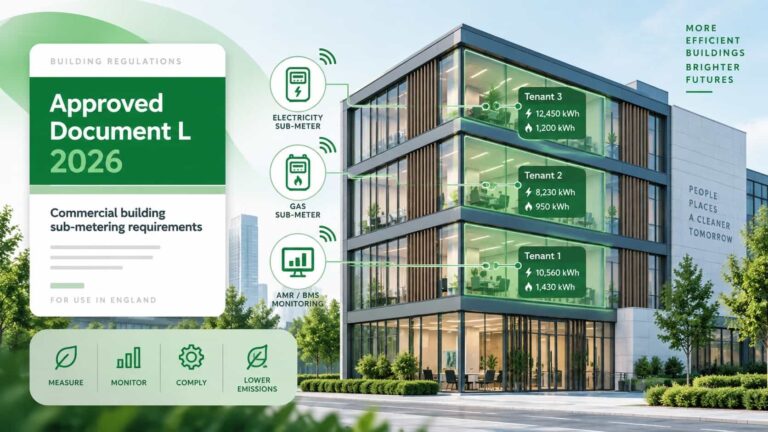
With proper sub-metering and monitoring systems in place, you can see energy consumption across your entire site or drill down to specific equipment and areas. Modern dashboards update data every 10 seconds, so you’re never looking at old information. But more importantly, the data’s actually useful because it’s presented in a way that makes sense.
Instead of dense spreadsheets of numbers, you see trends, patterns, and comparisons. You can see your consumption over the past hour, day, week, or year. You can compare how different areas or departments are performing. You can spot anomalies when something’s using significantly more energy than normal which usually points to a problem worth investigating.
The intelligence goes deeper too. Good energy management systems don’t just show you raw consumption; they highlight inefficiencies, anomalies, and opportunities. They might alert you when energy usage spikes unexpectedly, or when equipment’s running during times it shouldn’t be. They allow you to compare performance across different sites if you operate multiple locations. They help you understand which systems are your biggest consumers and where your biggest opportunities for improvement actually are.

Where The Real Value Shows Up
This is where real-time data becomes genuinely valuable: in the decisions you can make today instead of the ones you regret next month.
Let’s say your dashboard shows that your refrigeration equipment is cycling unusually often and consuming more energy than expected. Without that information, you’d find out in your quarterly bill that costs are up. With real-time data, a maintenance team can investigate today, discover the compressor needs servicing, fix it, and save money starting tomorrow. That’s the difference between paying for a problem and solving it.
Or imagine your building’s HVAC system is set to cool to 19 degrees when 21 degrees would actually be comfortable. Without visibility, you never question it. With real-time monitoring, you can see that HVAC’s consuming 35 percent of your total energy. You adjust the setpoint by 2 degrees, nobody notices the difference, and energy consumption drops 8 percent across the board. That decision gets made in minutes when you can see the data in real time.
For businesses running multiple shifts or multiple locations, real-time data is even more powerful. You can compare how different areas perform, identify which sites are running efficiently and which ones are inefficient, benchmark between similar facilities. A retail chain might discover that one store uses 40 percent more energy per square metre than similar locations. That triggers investigation: is the equipment older? Is the heating system misconfigured? Is the staff closing down systems properly when they leave? Real-time data lets you spot these differences and fix them systematically.
The payback on implementing real-time energy monitoring systems typically ranges from 6 to 24 months depending on your facility size and current energy consumption patterns. For many businesses, we’re talking 12 to 18 months. After that, the savings flow straight to the bottom line.
Decision-Making Gets Faster and Better
Here’s something that surprises a lot of facility managers when they first get proper energy data: how much better their decisions become.
Without real-time information, energy decisions are often emotional or based on assumptions. You might spend £50,000 on a new HVAC system because you assume it’ll save energy. With real data, you can model exactly what you’re spending on HVAC today, project what you’d save with different upgrade options, and make a decision based on actual numbers instead of guesses.
Or consider renewable energy decisions. Solar panels make sense for some buildings and not others, depending on your load profile. Do you use most of your electricity during daylight hours when solar would generate power? Or mostly at night? Real-time data tells you. You can see your consumption patterns and model renewable energy return on investment accurately rather than using industry averages that might not apply to your business.
Staffing and maintenance decisions improve too. Real-time energy data often reveals equipment problems before they become failures. A compressor working too hard. A pump cycling irregularly. A motor drawing excessive current. These things show up in energy patterns before they fail. Catching them through energy monitoring often prevents costly equipment failures and unplanned downtime.
Making The Business Case
The straightforward reason to implement real-time energy monitoring is financial. The typical case looks like this:
You invest £3,000 to £15,000 depending on facility size and complexity that’s for meters, sensors, installation, and software access. Within the first year, you identify and implement efficiency measures that reduce your energy consumption by 15 to 20 percent. For a business spending £30,000 per year on energy, that’s £4,500 to £6,000 in savings annually. Your investment pays back in roughly a year, and then the savings continue every year thereafter.
But there are additional benefits beyond the direct energy savings. You improve equipment reliability by catching problems early. You reduce unplanned maintenance and downtime. Your facilities operate more consistently and comfortably. You’ve got documentation showing you’re actively managing energy which matters for SECR reporting, sustainability targets, and increasingly, for customer and investor expectations.
If you’re working toward net-zero targets, real-time energy data becomes essential. You need to know your baseline accurately. You need to understand where your energy comes from and where you’re using it. You need to measure progress as you implement changes. Without real-time data, hitting net-zero targets is basically impossible you’re just guessing.
Getting Started Is Simpler Than You Think
This is where a lot of businesses get intimidated. They assume real-time energy monitoring requires massive capital investment, complicated IT systems, and technical expertise to run. In reality, modern systems are designed to be straightforward.
Start with a metering audit. A qualified technician spends a day or two assessing your building or facility, understanding your energy consumption patterns, and identifying where sub-meters would give you the most useful information. This typically costs £500 to £2,000 and immediately shows you where your biggest opportunities are.
From there, you install sub-meters at strategic points perhaps on major equipment loads, by department, by building, or by energy end-use depending on what matters for your business. Installation usually happens outside of business hours and doesn’t require significant downtime. Then you connect to a monitoring platform that gives you real-time visibility.
The software piece is the easy part now. Modern energy dashboards are designed to be intuitive. A facilities manager or building operator can log in, see how energy’s being used across the facility, drill into specific areas that look unusual, and understand what’s happening. Many systems can send automated alerts when something goes wrong your HVAC is running at unusual times, a piece of equipment is drawing excessive current, consumption spikes unexpectedly. Those alerts trigger action rather than waiting for the next monthly report.
The Honest Truth About Energy Data
Real-time energy monitoring isn’t magic. It doesn’t make your building suddenly 50 percent more efficient. It doesn’t solve problems automatically. What it does is give you clarity. It shows you what’s actually happening. And it turns that clarity into better decisions.
The businesses getting real value from energy monitoring aren’t the ones who install a system and then ignore it. They’re the ones who use the data to make targeted improvements. They investigate anomalies. They test changes and measure the results. They share the information with staff and make energy efficiency part of how they operate.
If you’re currently making energy decisions based on monthly bills and general assumptions, moving to real-time monitoring will absolutely change your results. You’ll spot waste you didn’t know existed. You’ll make better decisions about capital investments. You’ll hit sustainability targets more reliably. And most importantly, you’ll have actual visibility into something that’s probably one of your larger operating expenses.
That visibility is worth investing in. It consistently pays for itself, and then keeps paying for itself year after year. That’s not a sustainability story that’s just smart business.